How to Check Your Tyre Pressure at Home — and Why It Matters
Correct tyre pressure is one of the simplest things a driver can maintain, yet it has a direct effect on safety, handling, braking, fuel consumption and tyre life.
Car DIY
How to Check Your Tyre Pressure at Home — and Why It Matters
Correct tyre pressure is one of the simplest things a driver can maintain, yet it has a direct effect on safety, handling, braking, fuel consumption and tyre life.
Tyres naturally lose small amounts of air over time, so pressure should not be ignored simply because the tyres look normal. The U.S. National Highway Traffic Safety Administration (NHTSA) recommends checking tyre pressure regularly and using the pressure specified by the vehicle manufacturer rather than the maximum figure printed on the tyre itself. NHTSA
For more basic maintenance tasks, drivers can also follow CarBook Magazine’s guide to 7 Simple DIY Car Maintenance Checks Every Driver Should Know. CarBook
1. Find the Correct Tyre Pressure
Before adding or releasing air, find your car manufacturer’s recommended pressure.
This information is normally located on a sticker inside the driver’s door frame or door pillar, and it can also be found in the owner’s manual.
Do not automatically use the PSI figure printed on the tyre sidewall. That number generally represents the tyre’s maximum permitted pressure rather than the correct operating pressure for your particular vehicle. NHTSA
Also remember that some vehicles specify different pressures for the front and rear tyres.
2. Check the Tyres When They Are Cold
For the most accurate reading, check tyre pressure before driving or after the vehicle has been parked for several hours.
Driving heats the tyres and causes pressure to rise, which can produce a misleading reading. Michelin recommends checking when the tyres are cold or when the vehicle has travelled only a very short distance. Michelin Middle East
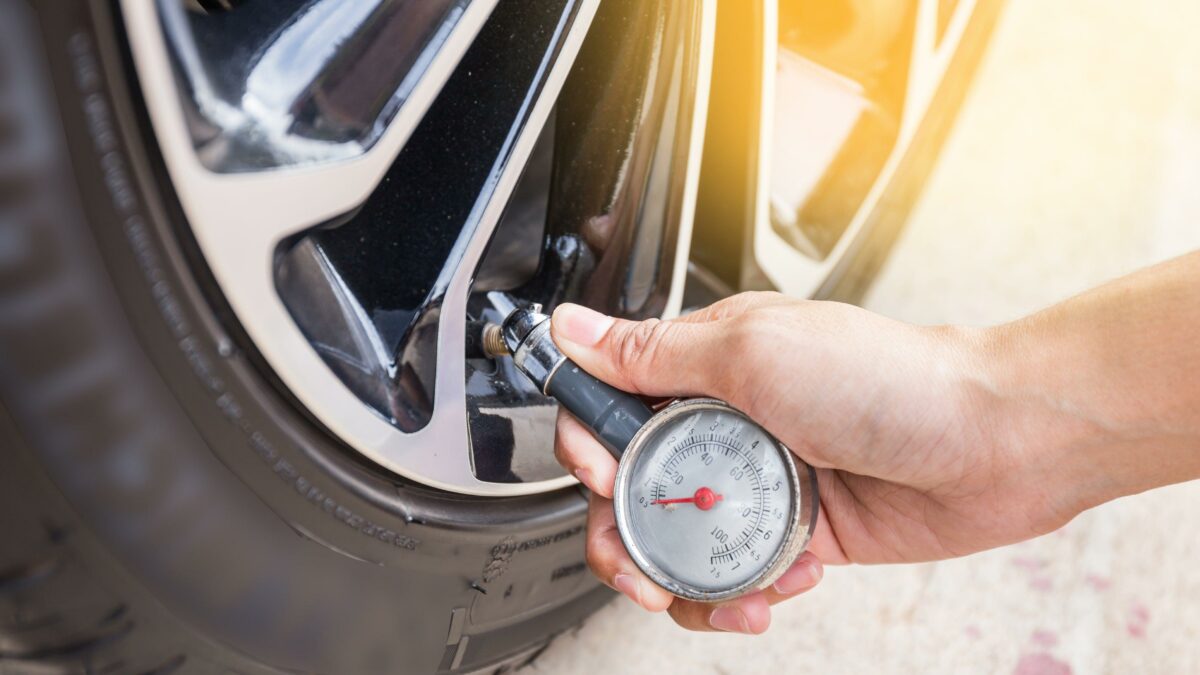
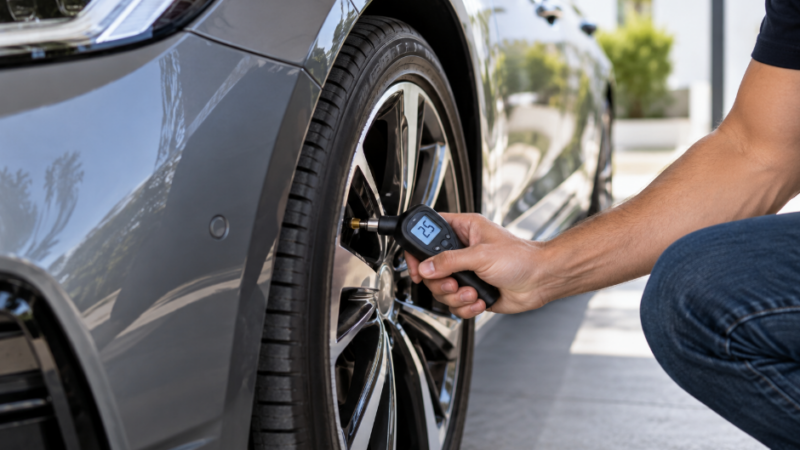
Remove the valve cap and firmly attach a digital or manual tyre-pressure gauge to the valve.
Compare the reading with your vehicle’s recommended PSI.
3. Add or Release Air
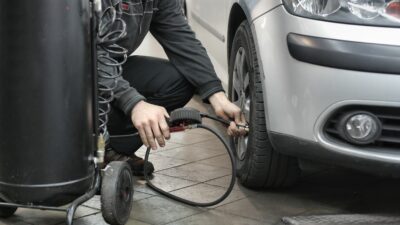
If the pressure is too low, use a portable compressor or a petrol-station air pump to gradually add air.
If it is too high, release a small amount of air through the valve and check again.
Repeat the process on all four tyres and, if your vehicle has one, check the spare tyre as well.
CarBook has also covered important seasonal checks in 5 DIY Car Checks UAE Drivers Should Do After Summer, including tyres, batteries, coolant and air-conditioning systems. CarBook
4. Inspect the Tyre While You Are There
Pressure is only part of tyre maintenance.
Take a few minutes to look for cracks, cuts, bulges, embedded objects or uneven tread wear. NHTSA advises motorists to inspect both the tread and sidewalls regularly, particularly before longer journeys. NHTSA
Uneven wear can sometimes indicate incorrect pressure, wheel-alignment problems or suspension issues and should be professionally inspected.
A Five-Minute Check That Can Make a Difference
Checking tyre pressure requires very little equipment and can be completed in just a few minutes.
A simple pressure gauge or portable compressor is enough for most drivers. Making this part of your regular car-care routine can help your tyres perform as designed, reduce unnecessary wear and identify potential problems before they become more expensive.