Why Software-Defined Vehicles Are the Biggest Automotive Trend of 2026
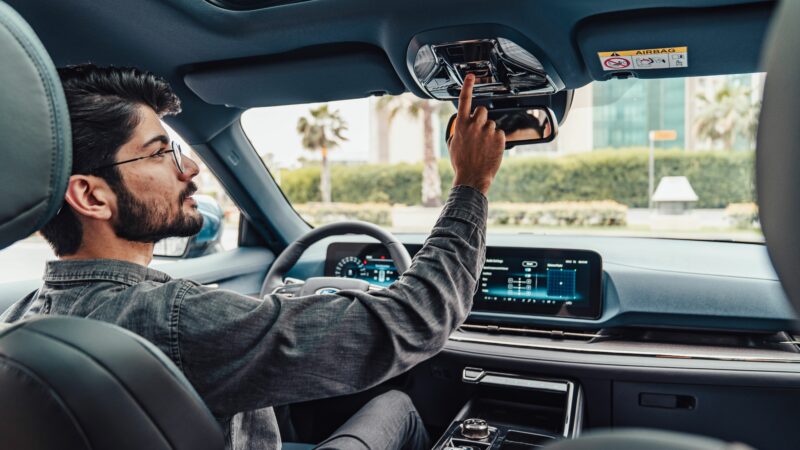
The automotive industry is entering a new era—one where a car is no longer defined solely by its engine, horsepower, or driving dynamics, but by the intelligence of its software. Welcome to the age of the Software-Defined Vehicle (SDV), a concept rapidly becoming the most significant trend shaping the future of mobility in 2026
Traditionally, vehicles received most of their features at the factory. Once a car left the production line, its capabilities remained largely unchanged throughout its lifetime. Today, that model is disappearing. Manufacturers are increasingly designing vehicles that can receive new features, performance improvements, and security updates through software, much like smartphones receive operating system updates. Industry analysts describe this transition as one of the most profound transformations the automotive sector has experienced in decades.
Leading the movement are electric vehicle pioneers such as Tesla, Rivian, and Lucid, whose vehicles have demonstrated how over-the-air (OTA) software updates can improve range, enhance driver assistance systems, introduce entirely new features, and even refine vehicle performance without requiring a dealership visit. Now, traditional automakers including Mercedes-Benz, BMW, Hyundai, General Motors, Volkswagen, and Ford are investing billions to adopt similar software-first architectures across both electric and combustion-powered vehicles.
Artificial intelligence is accelerating this evolution. Modern vehicles are increasingly equipped with AI-powered voice assistants capable of understanding natural language, learning driver preferences, planning routes, and controlling in-car functions through conversational commands. Rather than pressing multiple buttons, drivers can simply ask the vehicle to adjust the climate, locate a charging station, or recommend nearby restaurants. As computing power continues to improve, these digital assistants are becoming smarter and more personalized with every update.
Safety is also benefiting from this software revolution. Advanced Driver Assistance Systems (ADAS) are becoming more sophisticated, combining cameras, radar, sensors, and AI to improve lane centering, adaptive cruise control, emergency braking, and parking assistance. Continuous software updates allow manufacturers to refine these systems over time, helping vehicles become safer long after customers take delivery.
Another major trend is predictive maintenance. Instead of waiting for a warning light to appear, next-generation vehicles continuously monitor the health of batteries, brakes, motors, and electronic systems. Artificial intelligence can detect potential problems before they become serious, allowing owners to schedule maintenance proactively. This reduces unexpected breakdowns while improving reliability and lowering long-term ownership costs.
The shift toward software-defined vehicles is not limited to electric cars. Hybrid and even traditional combustion-engine models are increasingly adopting centralized computing platforms and over-the-air capabilities. This means buyers who are not yet ready to transition to full electrification can still enjoy many of the latest digital innovations. Automakers recognize that customers now expect their vehicles to evolve over time, just like their smartphones and other connected devices.
For consumers, this transformation changes the ownership experience entirely. Purchasing a vehicle is no longer the end of the journey—it is the beginning of an evolving relationship where software enhancements can continuously improve convenience, safety, entertainment, and performance throughout the life of the car.
As the automotive industry moves deeper into the digital age, software is becoming just as important as engines, batteries, or suspension systems. The next generation of vehicles will not simply transport passengers from one destination to another—they will learn, adapt, improve, and communicate in ways that were unimaginable only a few years ago.
For enthusiasts and buyers alike, one thing is becoming increasingly clear: the future of driving will be defined not only by what is under the hood, but by the intelligence running behind the screen.