Who Invented the Car Horn? How a Simple Warning Device Became an Automotive Essential
From hand-squeezed brass horns to electric warning systems and EV sounds, the car horn has evolved alongside the automobile itself.
The car horn is one of the simplest controls in a modern vehicle. Press the center of the steering wheel and a powerful sound immediately warns drivers, cyclists or pedestrians. Yet the familiar horn has a history stretching back to the earliest days of motoring.
Like many inventions in automotive history, the modern car horn cannot really be credited to one invention at one moment. It evolved from basic mechanical warning devices into electrically powered horns and, more recently, sophisticated electronic warning systems.g at low speeds and when reversing to help alert pedestrians and other vulnerable road users.
More Than a Button on the Steering Wheel
From hand-squeezed brass horns to Klaxons, electromagnetic horns and electronically generated EV warning sounds, automotive sound technology has developed for more than a century.
The technology has changed dramatically, but its fundamental purpose has remained remarkably consistent: making sure other road users know a vehicle is there.
And that makes the humble horn one of the oldest automotive safety concepts still used every time we drive.
Before the Electric Car Horn
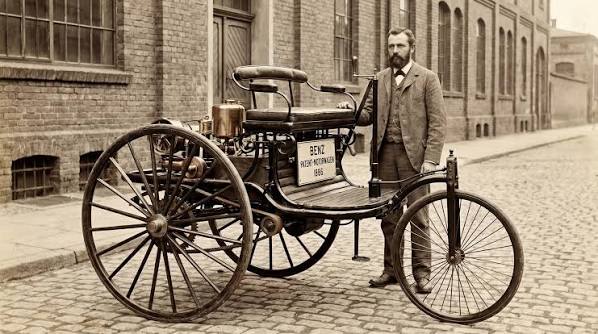
When automobiles began appearing on roads in the late 19th and early 20th centuries, drivers shared streets with pedestrians, bicycles and horse-drawn vehicles.
Early motorists therefore needed a way to announce their presence. Some early automobiles used bells and whistles, while one of the most recognizable solutions was the bulb horn.
The principle was remarkably simple. The driver squeezed a rubber bulb, which pushed air through a metal horn and produced a warning sound. It required no electricity and was easy to operate.
As automobiles became faster and traffic increased, however, drivers needed something louder and more practical. The evolution of the horn became part of the wider technological transformation that eventually produced the sophisticated systems found in today’s cars. CarBook explores many of these developments in its dedicated automotive technology section.
The Famous Klaxon Arrives
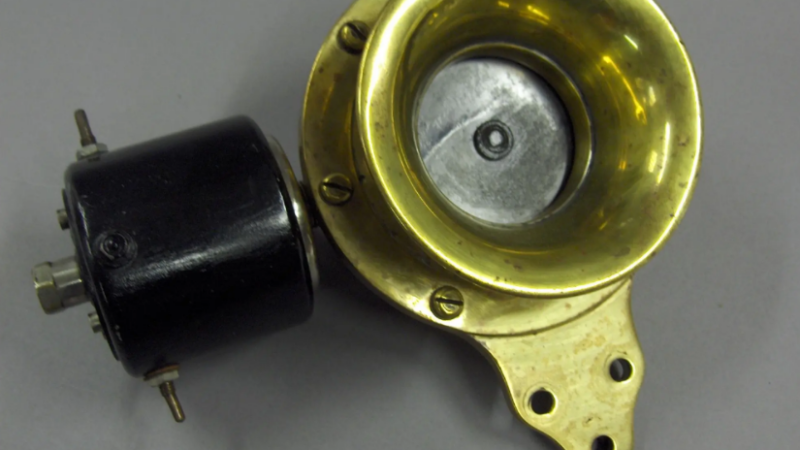
One important figure in the development of electrically operated warning horns was American inventor Miller Reese Hutchison, whose work became associated with the famous Klaxon horn.
Instead of requiring the driver to squeeze an air bulb, electromechanical horns could generate a much stronger warning sound electrically.
The Klaxon became particularly famous for the unmistakable “Ahooga!” sound associated with automobiles of the early 20th century.
The name became so closely associated with warning devices that klaxon eventually entered everyday language in several countries as a word for a loud warning horn.
How the Modern Car Horn Works
Modern horns are considerably more refined, but the basic objective remains unchanged.
Many conventional automotive horns use an electromagnetic mechanism and vibrating diaphragm. Pressing the horn switch completes an electrical circuit, causing the diaphragm to vibrate rapidly and generate sound.
Many cars also use two different horn frequencies—typically a high tone and a low tone—to create a fuller and more noticeable warning.
It is another example of how seemingly simple components have evolved alongside increasingly sophisticated automotive technology.
Electric Cars Created the Opposite Problem
Interestingly, the arrival of the modern electric vehicle has created an entirely different challenge: cars can now be too quiet.
As CarBook has previously explored in its coverage of the growing electric vehicle market in the UAE, EVs are increasingly combining advanced technology with exceptionally quiet operation.
At low speeds, however, that silence can make an approaching vehicle more difficult for pedestrians to detect.
This led regulators and manufacturers to introduce the Acoustic Vehicle Alerting System (AVAS). The European Commission explains that AVAS automatically generates a warning sound at low speeds and while reversing to help vulnerable road users detect electric and hybrid vehicles.
The technical framework is also defined in UN Regulation No. 138 via EUR-Lex, which covers the audibility requirements for quiet electrified vehicles.
For drivers considering the transition from conventional engines to electrification, CarBook’s guide to choosing between an EV, hybrid or petrol car in 2026 provides a broader look at how these technologies differ.
More Than a Button on the Steering Wheel
From hand-squeezed brass horns to Klaxons, electromagnetic horns and digitally generated EV warning sounds, automotive sound technology has evolved dramatically.
Yet its fundamental purpose has remained remarkably consistent for more than a century: making sure other road users know a vehicle is there.
The humble car horn may rarely receive the attention given to engines, performance or design, but it remains one of the automobile’s oldest and most recognizable safety features.