Innovation That Makes Every Kilowatt Count
Volkswagen Mission Efficiency Shows How Smarter Engineering Could Transform Electric Cars
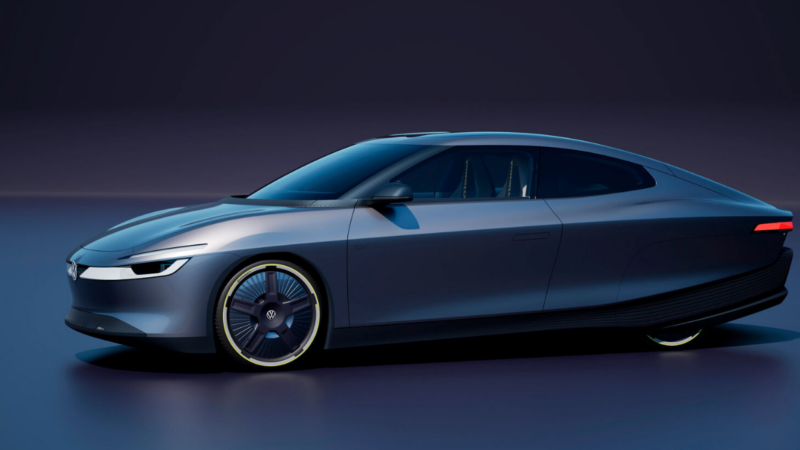
Electric-car development is often dominated by one headline figure: battery range. Volkswagen’s latest experimental vehicle takes a different approach. Instead of simply installing a larger battery, the Mission Efficiency concept explores how aerodynamics, lightweight construction, solar technology and an efficient electric drivetrain can make every kilowatt-hour go further.
Volkswagen unveiled the near-production concept in September 2026 after it completed a series of record-setting efficiency tests. The company describes Mission Efficiency as a technology demonstrator rather than a vehicle intended for sale, but several of its underlying technologies are closely related to Volkswagen’s next generation of production EVs. Volkswagen Newsroom
The project is particularly relevant as manufacturers move beyond simply electrifying their line-ups. As CarBook previously explored in its feature on automotive trends defining 2026, efficiency, software and smarter vehicle architecture are becoming increasingly important parts of EV development.
Aerodynamics Become the Innovation
Mission Efficiency achieves a remarkable drag coefficient of Cd 0.158. Volkswagen says this represents a new benchmark among road-approved automobiles. Volkswagen Newsroom
Rather than treating aerodynamic design as simply a styling exercise, engineers worked on the entire airflow around the vehicle. Among the innovations are patented wheel-rim deflectors designed to improve airflow around the wheels.
That matters enormously in an electric car. Reducing aerodynamic resistance means the motor requires less energy to maintain speed, potentially allowing manufacturers to increase usable range without continuously increasing battery size.
The principle complements the broader technological transformation CarBook examined in Top Automotive Technology Trends Shaping the Second Half of 2026.
Record-Breaking Energy Consumption
The numbers demonstrate what that engineering can achieve.
During an officially documented 1,278.36 km journey from Wolfsburg to Vienna, Mission Efficiency averaged 6.89 kWh/100 km excluding charging losses, or 7.51 kWh/100 km when charging losses were included. The 54.9-kWh battery required only one charging stop during the journey. Volkswagen Newsroom
Under a separate idealised test at a constant 68 km/h—with no gradients and auxiliary systems such as air conditioning switched off—consumption fell to 6.48 kWh/100 km. Volkswagen Newsroom
Those figures should therefore be understood as demonstration results rather than normal everyday consumption figures.
Solar Power Joins the Equation
Another interesting innovation sits almost invisibly within the vehicle.
Volkswagen has integrated solar cells into the roof and rear window, creating a 370-watt photovoltaic system. The generated electricity supports the vehicle’s electrical system rather than serving as its primary propulsion energy source.