The Car That Was Too Strange to Survive
Why the Citroën DS Still Looks Like It Came From the Future
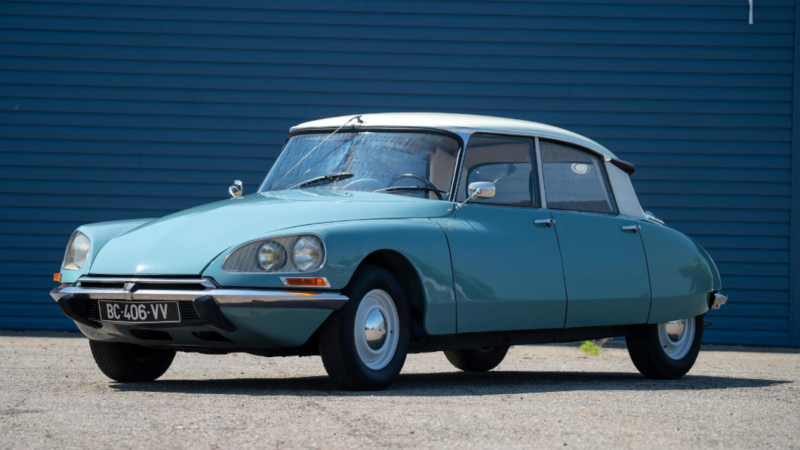
Imagine walking into a motor show in 1955 and seeing a car that looked nothing like anything else on the road.
While most vehicles were still built around familiar shapes, heavy chrome and conventional engineering, one French manufacturer unveiled something extraordinary.
Its name was the Citroën DS.
With its smooth, aerodynamic body, unusual headlights and advanced hydraulic suspension, the DS looked less like a family car and more like a machine from another century.
Seventy years later, it remains one of the most recognizable designs in automotive history.
And perhaps the most fascinating part of its story is that the technology that made it famous was also part of what made it so complicated to own.
A Car That Refused to Follow the Rules
When Citroën introduced the DS at the 1955 Paris Motor Show, the automotive industry was still relatively conservative.
The DS challenged almost everything people expected from a passenger car.
Its distinctive shape was developed under the direction of designer Flaminio Bertoni, while engineer André Lefèbvre played an important role in its technical development.
But its greatest innovation was largely invisible.
The car featured a hydropneumatic suspension system that allowed it to maintain ride height and provide an unusually smooth journey over imperfect roads.
For passengers accustomed to the harsher ride of conventional vehicles, the experience could feel remarkable.
The DS seemed to float rather than simply drive.
The Technology That Made It Extraordinary
The hydraulic system was responsible for several functions, including suspension, power-assisted braking and, on many versions, aspects of gear selection and clutch operation.
This integration was technologically ambitious, but it also introduced mechanical complexity.
Maintaining a DS required specialist knowledge, careful servicing and an understanding of components that differed significantly from those found in conventional cars.
What appeared futuristic in a showroom could become challenging in an ordinary repair workshop.
Yet this complexity is precisely what makes the DS fascinating today.
It represents a period when manufacturers were willing to take extraordinary engineering risks to create something genuinely different.
The Presidential Car That Became a Legend
The DS also secured a remarkable place in French political history.
In 1962, French President Charles de Gaulle survived an assassination attempt while travelling in a Citroën DS.
Despite damaged tyres, the vehicle was driven away from danger.
The incident became part of the DS legend, strengthening its reputation as an exceptional piece of French engineering.
However, the car’s story extends far beyond one dramatic event.
It became a symbol of French design, appearing in films, official motorcades and private collections.
Why Collectors Still Want It
Today, well-preserved examples appeal to enthusiasts who value originality, mechanical innovation and unmistakable design.
Unlike some classic cars that attract attention primarily through horsepower or racing victories, the DS is admired for challenging the definition of what a passenger car could be.
Its continuing appeal reflects the broader fascination with automotive history explored in CarBook’s Classic Cars Shape Automotive Identity.
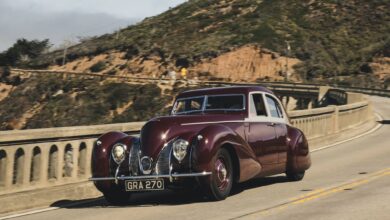
It also shares something with the remarkable story of the rebirth of the 1939 Bentley Mk V Corniche: both remind us that great automotive design can outlive the era that created it.
A Future That Arrived Too Early
The DS eventually ended production in 1975, but its influence never truly disappeared.
Its aerodynamic styling, emphasis on comfort and willingness to experiment helped establish ideas that would shape future generations of vehicles.
Modern cars may have digital suspension controls, advanced electronics and sophisticated driver assistance systems.
Yet few inspire the same sense of discovery as a Citroën DS parked beside an ordinary modern vehicle.
It is proof that a car does not have to be new to look futuristic.
Sometimes the most interesting car on the road is the one that arrived decades before the world was ready for it.