Electric Car Battery Care in the UAE: How to Protect Range and Performance
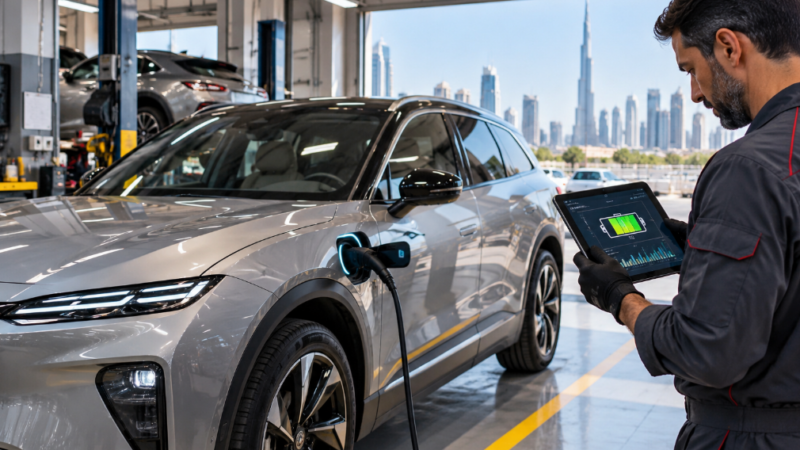
Electric vehicles are becoming an increasingly familiar sight on UAE roads, offering quiet performance, advanced technology and an alternative to traditional petrol-powered cars. However, the region’s demanding climate creates an important consideration for EV owners: protecting battery health.
High temperatures, charging habits and daily driving conditions can influence battery performance over time. Understanding these factors helps motorists get more from their vehicles while avoiding unnecessary maintenance costs.
Why Battery Temperature Matters
An electric vehicle’s battery performs best within a controlled temperature range. Excessive heat can accelerate chemical ageing, gradually reducing the amount of energy the battery can store.
Modern electric cars use sophisticated thermal-management systems to regulate battery temperature. Nevertheless, regularly leaving a vehicle exposed to extreme heat may increase the demands placed on these systems.
Drivers in Dubai and other UAE cities should consider shaded parking, covered garages and scheduled cabin preconditioning where available.
Smart Charging Habits
Charging strategy also contributes to battery longevity.
For everyday driving, many manufacturers recommend maintaining a moderate charge level rather than repeatedly charging to maximum capacity. However, the correct approach depends on battery chemistry and the manufacturer’s instructions.
Some electric vehicles are designed to tolerate frequent full charges, while others benefit from lower daily charging limits.
Understanding the difference between AC and DC charging can also help owners develop a practical routine. CarBook Magazine explains these options in its guide to EV Charging in the UAE: DC vs AC.
Driving Habits Affect Range
Battery health is only one factor influencing how far an electric vehicle can travel.
Acceleration, highway speeds, tyre pressure and air-conditioning usage all influence energy consumption. In the UAE, cabin cooling can become a significant demand during warmer months.
Drivers can improve efficiency by maintaining recommended tyre pressures, accelerating smoothly and avoiding unnecessary weight.
Regenerative braking can also recover some energy during deceleration, although its effectiveness varies between vehicles and driving conditions.
The Importance of Regular Inspections
Electric vehicles generally require fewer routine engine-related services than petrol cars, but they are not maintenance-free.
Tyres, suspension components, brakes, cooling systems and electronic equipment still require attention.
Battery diagnostics can help technicians identify abnormal temperatures, charging issues or differences between battery modules before they become major problems.
Specialist inspections are particularly important when buying a used electric vehicle, where battery condition can influence long-term ownership value.
Choosing the Right EV for UAE Conditions
Before purchasing an electric vehicle, motorists should consider daily mileage, charging access, warranty terms and the availability of qualified service facilities.
For a broader comparison of vehicle technologies, explore CarBook’s EV, Hybrid or Petrol? Choosing the Right Car.
The US Department of Energy’s Alternative Fuels Data Center also provides information about electric vehicle technology and ownership.
The Bottom Line
Protecting an EV battery does not require complicated maintenance. Responsible charging, careful driving, suitable parking and regular inspections can all contribute to better performance.
As electric mobility develops across the UAE, informed ownership will remain essential for drivers seeking efficiency, reliability and long-term value.