Mercedes-Benz 300 SL Gullwing: The Car That Turned Engineering into Art
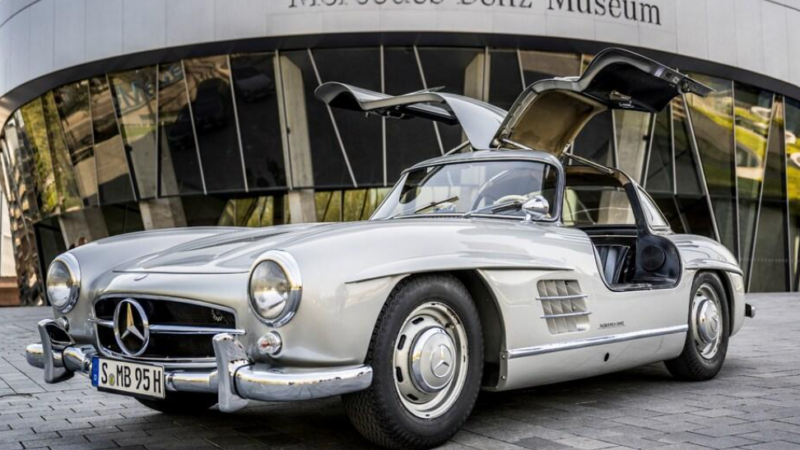
More than seven decades after its debut, the legendary Mercedes-Benz 300 SL Gullwing remains an extraordinary symbol of automotive innovation, performance and timeless design.
Few automobiles have captured the imagination of generations quite like the Mercedes-Benz 300 SL Gullwing. With its upward-opening doors, sculptural bodywork and pioneering engineering, the German sports car transformed expectations of what a high-performance road car could achieve.
Introduced in 1954 at the International Motor Sports Show in New York, the 300 SL represented a remarkable combination of motorsport experience and sophisticated automotive craftsmanship.
From Racetrack to Road
The origins of the 300 SL can be traced to the Mercedes-Benz W194 racing car of 1952. Its lightweight construction and advanced engineering helped establish Mercedes-Benz as a formidable competitor in international motorsport.
Recognising the commercial potential of the racing machine, American automotive importer Max Hoffman encouraged Mercedes-Benz to develop a road-going version for customers seeking an exclusive sports car.
The result was an automobile that would become one of the most celebrated vehicles in motoring history.
The Engineering Behind the Famous Doors
The Gullwing’s extraordinary doors were not originally conceived simply as a styling statement.
Its innovative tubular spaceframe chassis created high side structures that made conventional doors impractical. Engineers therefore developed upward-opening doors, producing one of the most recognisable automotive silhouettes ever created.
This innovative approach is documented in the official Mercedes-Benz 300 SL historical archive.
Performance Ahead of Its Time
Power came from a 3.0-litre six-cylinder engine producing approximately 215 horsepower.
The 300 SL also pioneered direct petrol injection in four-stroke production passenger-car engines, establishing an important technological milestone that influenced subsequent automotive engineering.
Mercedes-Benz Media+1
Its combination of relatively lightweight construction, sophisticated aerodynamics and powerful engineering positioned it among the outstanding sports cars of its era.
An Automotive Collector’s Dream
Mercedes-Benz produced just 1,400 examples of the Gullwing coupé between 1954 and 1957, making surviving examples particularly desirable among automotive collectors.
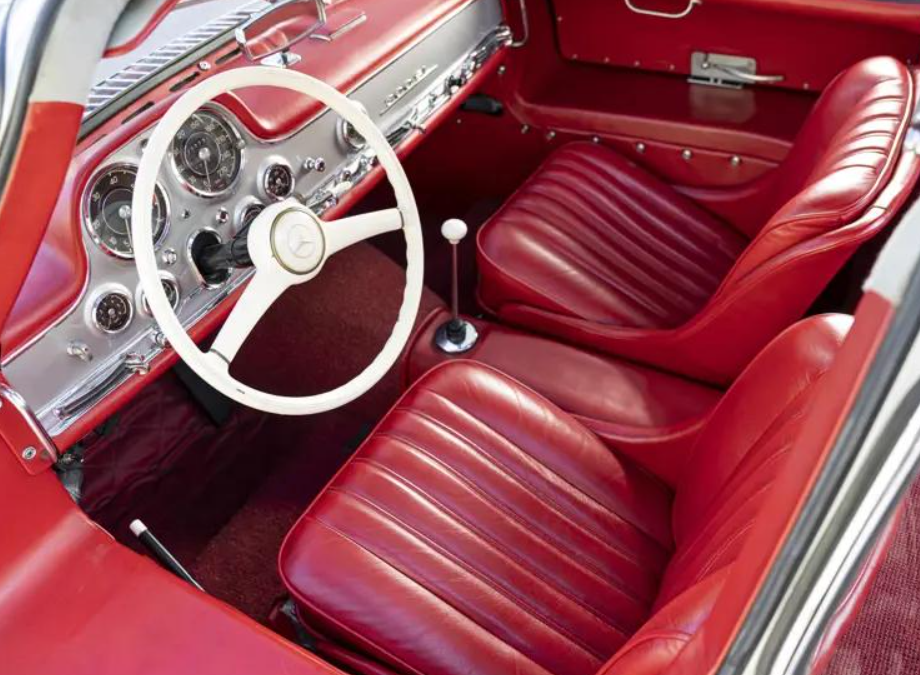
Its appeal extends beyond rarity. Every element, from the elegant dashboard to the sculpted bodywork, reflects an extraordinary period of automotive creativity.
This appreciation for craftsmanship is also celebrated in CarBook Magazine’s feature on the rebirth of the 1939 Bentley Mk V Corniche.
A Legacy That Continues Today
The Gullwing’s influence remains visible in later Mercedes-Benz sports cars, including the SLS AMG, which reintroduced its distinctive door configuration to a modern generation of enthusiasts.
As explored in CarBook Magazine’s coverage of the golden age of automotive elegance, exceptional classic automobiles possess a character that transcends generations.
The Mercedes-Benz 300 SL Gullwing is more than a historic sports car. It represents an era when ambitious engineering, artistic design and mechanical innovation combined to create something truly extraordinary.
Its legacy remains a powerful reminder that the most memorable automobiles are those that dare to challenge convention.