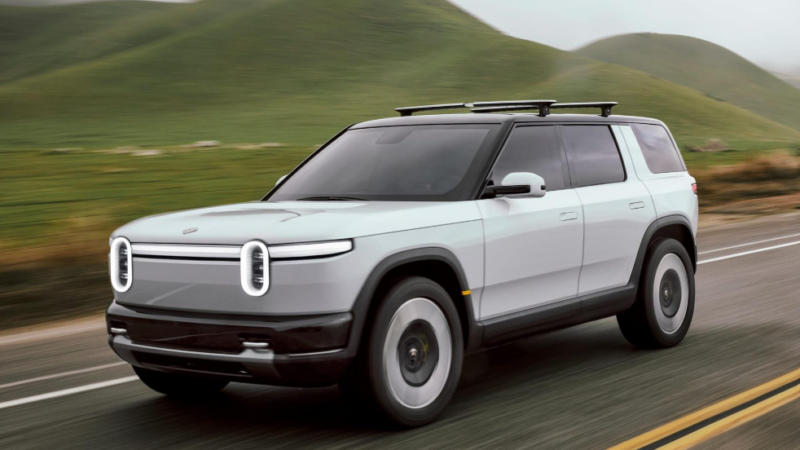
Rivian has reached an important milestone in its electric vehicle journey, with the new R2 SUV becoming the company’s best-selling vehicle by volume. The achievement highlights growing interest in practical electric SUVs and strengthens Rivian’s position in an increasingly competitive automotive market.
The R2 represents a major step in the American manufacturer’s strategy to reach a wider audience beyond its premium R1T pickup and R1S SUV.
A New Chapter for Rivian
According to Rivian’s third-quarter financial results, the R2 outsold the company’s other vehicle models during the quarter, contributing to record deliveries of 19,248 vehicles.
The automaker also reported revenue of approximately $2.155 billion, representing a 38% increase compared with the same period a year earlier.
These results suggest that Rivian’s decision to introduce a more accessible electric SUV is beginning to produce meaningful commercial results.
Unlike the larger R1 models, the R2 targets customers seeking an everyday vehicle that combines practicality, modern technology, and adventure-oriented styling.
Designed for Everyday Adventures
The R2 retains Rivian’s recognizable design language, including its distinctive front lighting signature and clean exterior surfaces.
Its proportions are intended to make the vehicle suitable for urban environments while preserving the versatility expected from an SUV.
Inside, Rivian continues to emphasize digital technology, practical storage solutions, and a minimalist cabin experience.
The R2 also forms part of the company’s broader efforts to integrate advanced driver-assistance features and intelligent software into its vehicles.
Readers following developments in electric vehicles will recognize how software, convenience, and charging infrastructure are becoming increasingly important factors in purchasing decisions.
Technology Takes Centre Stage
Rivian’s latest software developments demonstrate its ambition to compete through more than vehicle design.
The company continues to develop its Autonomy+ platform, which supports hands-free driving on compatible roads under appropriate driver supervision.
Its planned Point to Point functionality is intended to extend assisted driving across more complex routes, including urban streets and intersections.
However, these systems remain driver-assistance technologies rather than fully autonomous driving solutions.
According to Electrek’s analysis, the R2’s early sales performance has become an important development in Rivian’s broader business strategy.
A Competitive Electric SUV Market
The R2 enters a segment where manufacturers must balance affordability, battery performance, charging convenience, and technology.
Competition from established automotive brands and newer electric vehicle manufacturers continues to intensify.
For consumers, this competition may encourage more choice and improvements in vehicle functionality.
For Rivian, maintaining production efficiency and meeting customer expectations will be essential to sustaining the R2’s early momentum.
What Comes Next?
The R2’s achievement is significant, but long-term success will depend on consistent deliveries, customer satisfaction, and financial performance.
Its early popularity suggests that Rivian may have found an important product for expanding its customer base.
As the electric SUV market evolves, the R2 could become one of the models shaping Rivian’s future and demonstrating how emerging automotive brands can compete with established manufacturers.