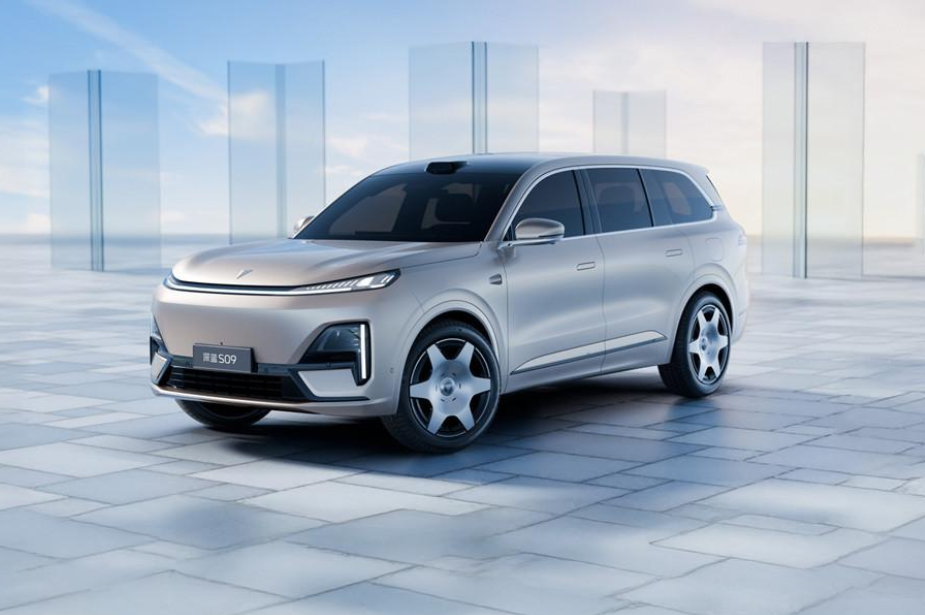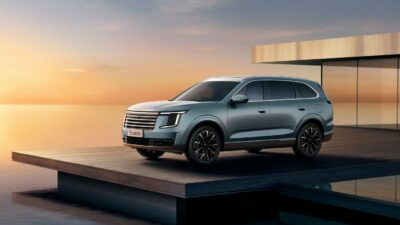
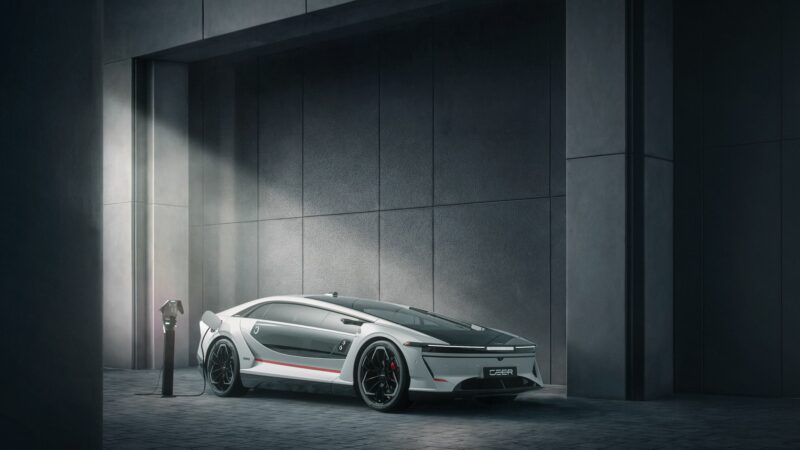
Saudi Arabia has taken one of its biggest steps yet into the global automotive industry with the unveiling of the CEER EXOBOT, a new flagship electric vehicle offered in both sedan and SUV form.
Officially revealed on September 21, the EXOBOT represents the first flagship vehicle family from CEER, Saudi Arabia’s national automotive company. Both vehicles have been designed and engineered locally and will be manufactured at CEER’s production complex in King Abdullah Economic City.
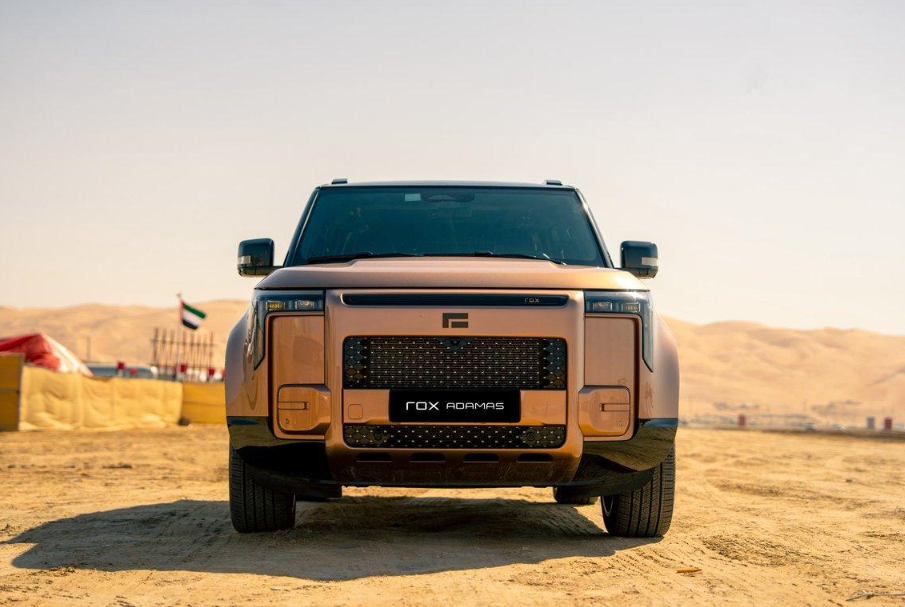
The launch comes at a particularly important time for the Gulf automotive sector. The region is gradually moving beyond its traditional role as a major market for imported vehicles and developing its own manufacturing capabilities. In the UAE, for example, Carbook recently reported on the start of ROX ADAMAS production in Abu Dhabi, with locally produced vehicles carrying the “Made in the Emirates” mark.
High-Performance Electric Power
EXOBOT is designed to compete in the rapidly evolving premium electric vehicle market, and its performance figures immediately attract attention.
According to CEER’s official EXOBOT announcement, the vehicle uses a tri-motor all-wheel-drive electric architecture. At its highest specification, the EXOBOT produces up to 1,111 horsepower and 1,500Nm of torque, with the sedan capable of accelerating from 0–100km/h in just 2.1 seconds.
The SUV can complete the same sprint in approximately 2.4 seconds, demonstrating that CEER is targeting considerably more than everyday electric mobility.
For the EXOBOT First Edition, CEER specifies 850 horsepower and 1,000Nm of torque. The First Edition sedan reaches 100km/h in 2.6 seconds, while the SUV takes 2.9 seconds.
Its 112kWh battery provides an estimated range of up to 670km for the sedan and 560km for the SUV under the NEDC cycle. An 800-volt electrical architecture also enables charging from 10 to 80 percent in under 30 minutes.
Technology Designed for the Middle East
One of the most interesting elements of EXOBOT is that CEER says the vehicle has been engineered specifically for Saudi Arabia and the wider region.
Extreme heat remains one of the biggest considerations for electric vehicles operating in Gulf markets. CEER says its Halo Cooling technology has been developed to provide strong thermal performance in extreme temperatures, while special glass technology helps reduce solar heat entering the cabin.
That regional engineering focus could become increasingly important as electric vehicles expand across GCC markets and buyers demand cars capable of handling high temperatures and long-distance driving.
The cabin is equally technology-focused. A huge 48-inch curved 8K Digital Horizon Display stretches across the dashboard, accompanied by a 10.4-inch central control screen and an additional rear passenger display.
The EXOBOT also introduces Steer-by-Wire technology, rear-wheel steering and an intelligent voice assistant capable of communicating in both Arabic and English.
These features reflect a broader shift toward increasingly digital vehicles, where software, artificial intelligence, connectivity and advanced displays are becoming almost as important as traditional mechanical performance.
Saudi Arabia Builds an Automotive Industry
The significance of EXOBOT extends beyond the vehicle itself.
Reuters reports that CEER is a joint venture between Saudi Arabia’s Public Investment Fund and Foxconn. Foxconn has provided electrical architecture, while BMW has contributed engineering technology to the project.
CEER’s development is part of Saudi Arabia’s wider strategy to establish a domestic automotive industry and diversify its economy. The company plans to develop seven models by 2030, including midsize and compact vehicles with different propulsion options.
According to CEER’s official company announcement, the manufacturer is also targeting 45 percent local content by 2034 as it works with international and Saudi suppliers to develop a broader automotive ecosystem.
The company projects that by 2034 it could contribute more than $8 billion to Saudi GDP, improve the Kingdom’s trade balance by around $21 billion, and support approximately 30,000 direct and indirect jobs.
The Gulf’s Automotive Landscape Is Changing
Saudi Arabia is not alone in seeking a greater role in automotive production.
The UAE is also investing in advanced vehicle manufacturing, artificial intelligence and mobility technology. The recent start of local ROX ADAMAS production, explored in Carbook’s report on the UAE’s emerging automotive manufacturing sector, demonstrates how quickly the regional landscape is changing.
For decades, the GCC has been one of the world’s most important markets for luxury cars, SUVs and high-performance vehicles. The next phase could increasingly involve vehicles that are not simply sold in the Middle East but also designed, engineered and manufactured here.
EXOBOT is therefore much more than the introduction of another premium EV.
With Saudi Arabia building CEER and the UAE expanding its own automotive manufacturing footprint, the Gulf is beginning to establish a new position within the international car industry.
The question is no longer simply which global vehicles will arrive in the Middle East next.
Increasingly, it is which Middle Eastern vehicles will be ready to compete with the world.