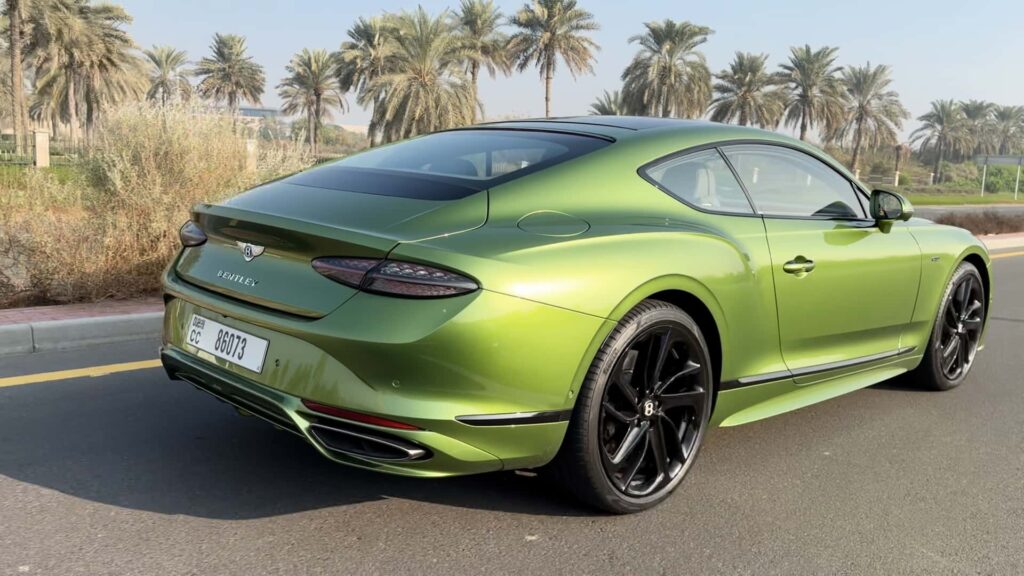
Bentley Continental GT Speed driven
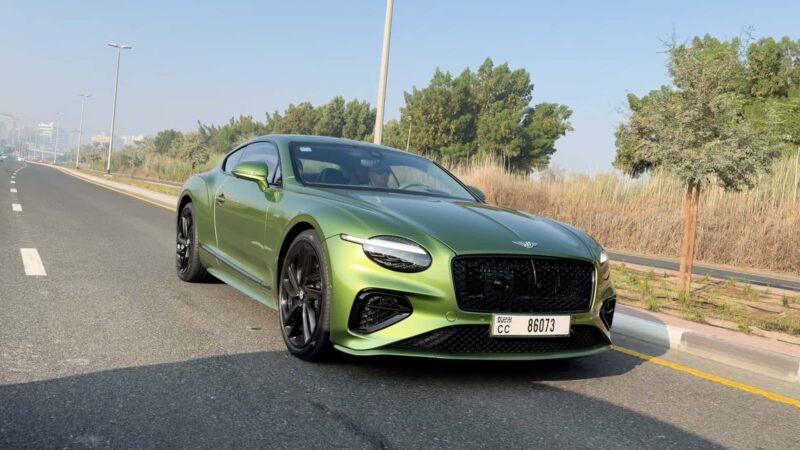
Aristocratic Presence, Graceful Performance
Words: Fadi Takieddine
The story of Bentley in the world of cars is comparable to that of a man who, due to the challenges of life, was forced to take a road that was different from what he had always wanted to take, only to find success beyond what he had ever imagined.
At the beginning of the twentieth century, when Bentley began its journey in the world of the charming machine (the car), it was quite clear what they wanted to achieve: building sports cars of high performance, worthy of the racing track. This was realized in the 1920s, when Bentley took part in the 24 Hours of Le Mans, winning several times in the process.
However, as is often the case with car makers who focus on creating the best cars for the racing track, such as Maserati, Mclaren, and Ferrari, their concentration on racing came at a price, which was their acquisition by Rolls-Royce, their exit from racing, and their entry into Goodwood’s “golden cage,” where they would remain until the 1990s, playing the role of a slightly sporty version from the queen of the road.
This departure from the romance of sporting passion was arguably one of the greatest challenges for the company. Yet, just as adversity can refine the character of a great man, so too would it refine the character of Bentley. Under the guidance of the Volkswagen Group, Bentley would grow to become a carmaker that could deliver on the rare promise of offering both thrilling performance and an unmistakable aristocratic elegance.
This balance is arguably best exemplified in the current “Speed” variant of the Continental GT. This car, which sits between the GT and the extreme Supersports variant, strikes the best balance of all the Bentleys.
This balance of weight is, of course, an extension of the balance of the car itself in the latest iteration of the Speed, particularly with the adoption of hybrid technology. Despite gaining 180 to 190 kilograms in total weight from the previous car, the weight is perfectly balanced, with 50 percent resting on the front axle and 50 percent on the rear axle. This is due to the use of a smaller V8 engine up front and a rear-mounted hybrid battery, which is the main contributor to the weight gain.
Mechanically, it is equipped with a 4.0-liter V8 internal combustion engine that produces 581 HP, coupled with an electric motor that produces 188 HP, making a total 0f 771 HP. The car is equipped with an eight-speed automatic transmission system.
When on the road, in addition to its weight distribution, the car is also equipped with state-of-the-art technology that includes four-wheel steering, two-chamber dampers, active anti-roll control, an electronic differential, and torque vectoring. The car is therefore able to offer a driving experience that is even better than that of the previous generation.
While the previous generation of this car could experience understeer at the front when accelerating in tight corners, the Continental GT Speed is in no way similar. This is due to its weight distribution, which makes it behave in an incredible manner. When turning in corners, the car spins around its center point rather than being pushed in one direction by the front or back wheels.
This dynamic capability is accompanied by exceptional comfort and a sense of confidence. The car does not feel light in its lateral movement; instead, it feels as though it is firmly planted on the road, as though an invisible magnetic force is at work.
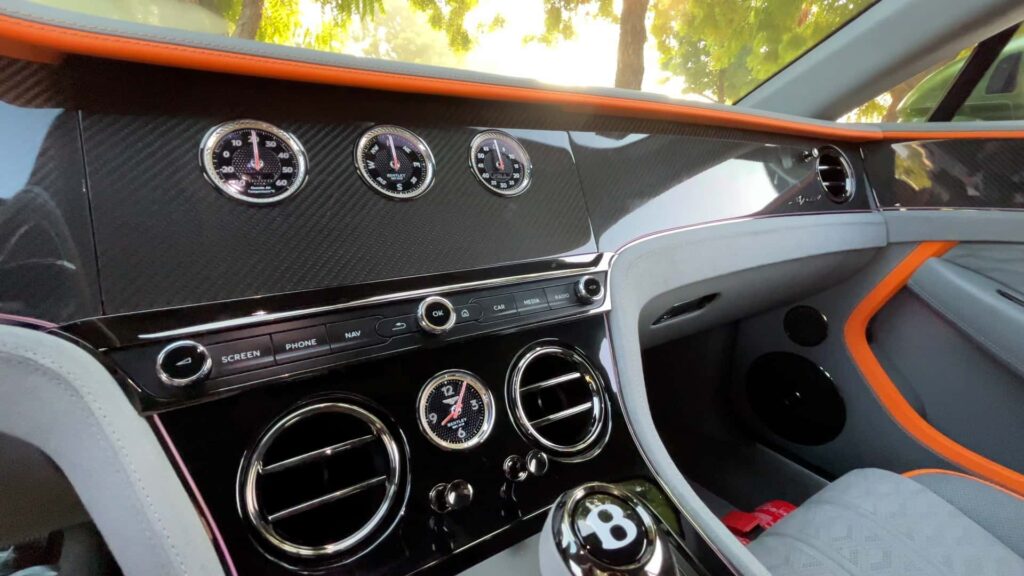
The inside of the car is largely unchanged in design, retaining Bentley’s signature rotating display on top of the center console. This is an elegant design that changes seamlessly from a digital display for the infotainment system, to a selection of classic analog displays, to a sophisticated display of wood or carbon fiber.
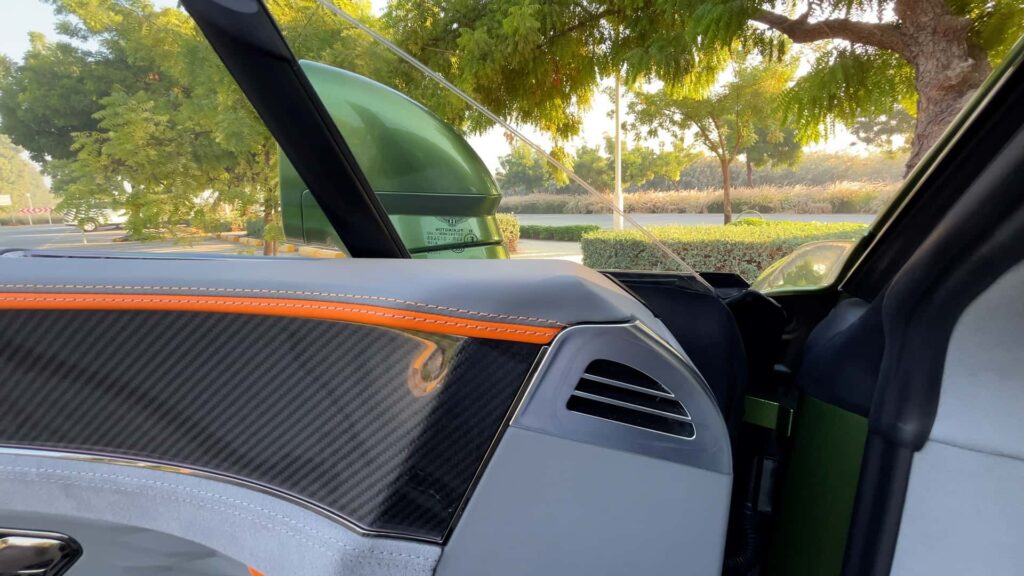
The inside of the car is a masterclass in craftsmanship, with the use of leather, wood, metal, and wool, all of which are crafted with meticulous attention to detail. New technologies are used, including three-dimensional leather finishing in some areas. Fabric inserts in the seats, for instance, have several advantages over using Nappa leather, including greater softness and body support during cornering. The seats are exceptionally comfortable, with a sense of effortless luxury and complete relaxation.