Mitsubishi brings back one of the GCC’s best-known 4×4 names with serious off-road hardware, seven seats and a completely redesigned cabin
For drivers across the UAE and GCC, the Mitsubishi Pajero needs little introduction. For decades, the rugged SUV was a familiar sight on highways, desert tracks and family driveways across the region.
For drivers across the UAE and GCC, the Mitsubishi Pajero needs little introduction. For decades, the rugged Japanese SUV was a familiar sight on highways, desert tracks and family driveways throughout the region.
Now the legend is officially back.
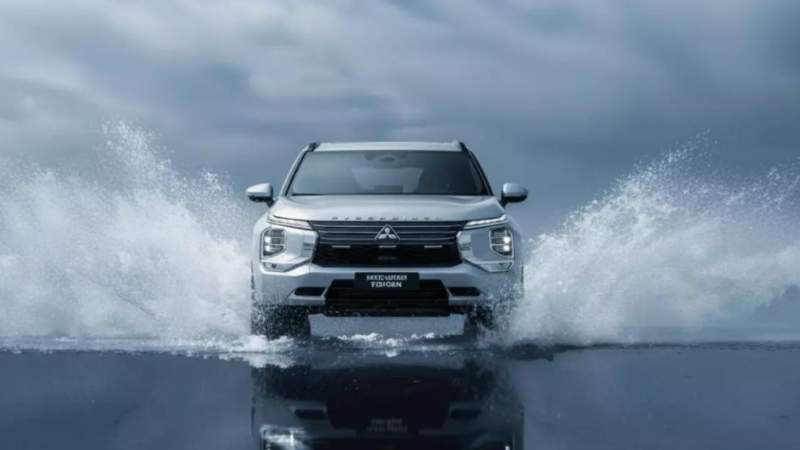
Mitsubishi Motors has unveiled the all-new Pajero, introducing a new generation of the famous SUV with a ladder-frame chassis, advanced four-wheel-drive technology and a three-row, seven-seat cabin.
The comeback arrives at an interesting time for the regional SUV market. Established Japanese 4x4s are facing increasing competition from technologically advanced new models, particularly as buyers across the UAE and GCC gain more choice.
For more new launches and regional automotive news, explore the latest stories on CarBook Magazine.
A Serious 4×4 Foundation
Mitsubishi has resisted the temptation to turn the Pajero into another road-focused crossover.
Instead, the company has built the new generation around a high-rigidity ladder frame, giving it the type of construction expected from a serious off-road SUV.
Under the bonnet is a specially developed 2.4-litre clean diesel engine, producing up to 480 Nm of torque and paired with a newly developed eight-speed automatic transmission.
The Pajero also receives Mitsubishi’s Super Select 4WD-II system.
Drivers can choose between 2H rear-wheel drive, 4H full-time four-wheel drive, 4HLc with a locked centre differential and 4LLc, which combines the locked centre differential with low-range gearing.
Mitsubishi has gone further by combining the system with Super-All Wheel Control (S-AWC) and seven selectable drive modes: Normal, Eco, Gravel, Snow, Mud, Sand and Rock.
That Sand mode should be particularly interesting when the Pajero eventually reaches Middle Eastern customers.
Readers interested in choosing vehicles specifically for this region can also see CarBook’s guide to GCC Specs vs Imported Cars in the UAE.
Built for the Desert — and the City
Ground clearance stands at 230 mm on versions equipped with 20-inch wheels.
Mitsubishi quotes a 30.4-degree approach angle, 22.6-degree ramp breakover angle and 25.8-degree departure angle.
Those figures reinforce the Pajero’s off-road credentials, but Mitsubishi is also putting considerably more emphasis on refinement.
The company describes the new Pajero as a premium cross-country SUV, rather than simply a rugged utility vehicle.
That matters in markets such as Dubai and Abu Dhabi, where large SUVs often need to perform two very different jobs: handling desert trips at the weekend while remaining comfortable and sophisticated enough for everyday city driving.
Explore more SUV and new-car stories on CarBook.
The Cabin Takes a Major Step Forward
Inside, the transformation is substantial.
Higher specifications feature two 14.3-inch displays, while Mitsubishi has recreated the famous Pajero triple-meter concept digitally through its new Multi-Meter display.
It can show information including altitude, compass direction, temperature, vehicle pitch and roll angles and Active Yaw Control status.
Wireless smartphone connectivity is also available.
The three-row configuration accommodates seven occupants, while the second row can slide by up to 150 mm to improve passenger space and third-row access.
Mitsubishi has also equipped the Pajero with available seat ventilation and three-zone automatic climate control — features particularly relevant in Gulf temperatures.
More Technology, but Still a Pajero
Modern safety technology includes Mitsubishi’s MI-PILOT highway driver-assistance system, Adaptive Cruise Control and Lane Keep Assist.
There is also a 3D Multi Around Monitor using four cameras to provide a comprehensive view around the SUV.
For off-road driving, an under-floor view can show terrain immediately beneath and ahead of the vehicle — potentially useful when navigating rocks, steep terrain or difficult desert tracks.
The technology demonstrates how dramatically the traditional 4×4 has evolved.
You can follow more developments in automotive technology through CarBook Magazine’s technology coverage.
When Will the New Pajero Reach the Middle East?
This is the big question for GCC buyers.
Mitsubishi says the Pajero will initially launch in Thailand, followed by Japan and Australia during fiscal 2026.
From fiscal 2027 onward, the company plans to expand the vehicle into approximately 100 countries, specifically confirming that the Middle East is included in its international rollout plans.
However, Mitsubishi has not yet announced UAE pricing, exact GCC specifications or a confirmed UAE showroom date.
That means Gulf buyers should wait for the regional specification before making direct price or equipment comparisons.
Can the Pajero Become a GCC Favourite Again?
The Pajero name carries considerable recognition in the Gulf, but nostalgia alone will not guarantee success.
Today’s SUV buyer expects much more: sophisticated infotainment, advanced safety systems, premium cabin quality, strong performance and competitive pricing alongside genuine off-road capability.
The new Pajero appears designed around precisely that challenge.
It retains the mechanical ingredients enthusiasts want — ladder-frame construction, low-range four-wheel drive and substantial ground clearance — while adding the technology and refinement expected from a modern flagship SUV.
After years away, one of the GCC’s most recognisable Japanese 4×4 names is preparing for its comeback.
And when UAE specifications and pricing are finally announced, the Pajero could once again become one of the region’s most interesting SUV battles.
Official external source: Mitsubishi Motors – All-New Pajero World Premiere